

Risk Management
In terms of risk governance, Huali Group has established a comprehensive risk management system with clearly defined responsibilities and authorities that complies with international governance standards. This framework adopts a "Three Lines of Defense" structure, clearly delineating risk management responsibilities and collaboration mechanisms across all levels. It establishes the Board of Directors as the supreme decision-making and oversight body of the risk management system.Under the Board's authorization, the Audit Committee performs professional oversight functions regarding the establishment, operation, and effectiveness of the risk management framework.
The first line of defense consists of business units and corporate functions, serving as direct risk owners and frontline managers responsible for implementing risk identification, assessment, and control measures in daily operations.
The second line of defense refers to the Group's risk management department and its specialized teams, which undertake professional support functions including system design, standard setting, overall coordination, as well as risk monitoring and reporting.
The third line of defense consists of the Board of Directors and its authorized Audit Committee. The Board is responsible for major risk management decisions and top-level oversight, while the Audit Committee operates independently from executive management, reporting directly to the Board. Its mandate includes conducting independent audits, evaluations, and verifications of the effectiveness of risk management and internal controls implemented by the first two lines of defense.
Impact, Risk, and Opportunity Management
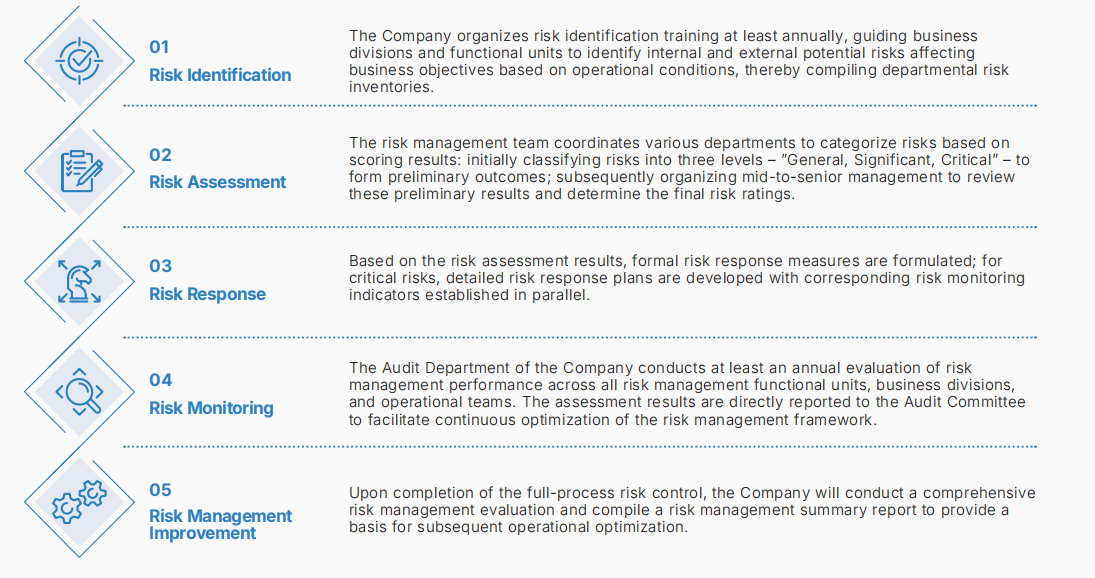
Huali Group implements comprehensive risk management at the corporate level, conducting systematic annual assessments of potential existing and emerging risks. This process encompasses five key steps: risk identification, risk analysis and evaluation, risk response, as well as monitoring and improvement. This process encompasses all aspects of corporate operations, designed to achieve comprehensive closed-loop risk management through identifying and analyzing internal/external risks and their impacts, while conducting periodic reviews to optimize the adequacy and effectiveness of existing control measures. This dynamic process provides a solid foundation for the Company’s business continuity and robust growth, supporting the achievement of overarching strategic objectives and sustainable development.
Risk Management Process
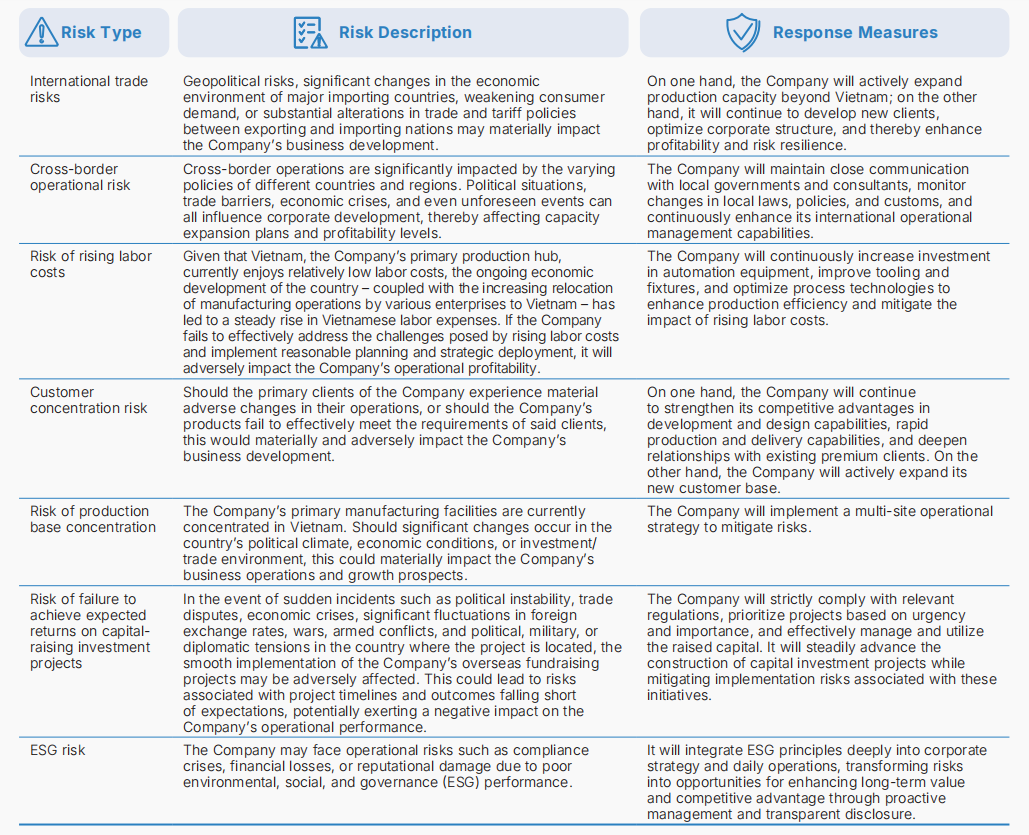
Risk Identification Result
Risk Management Culture
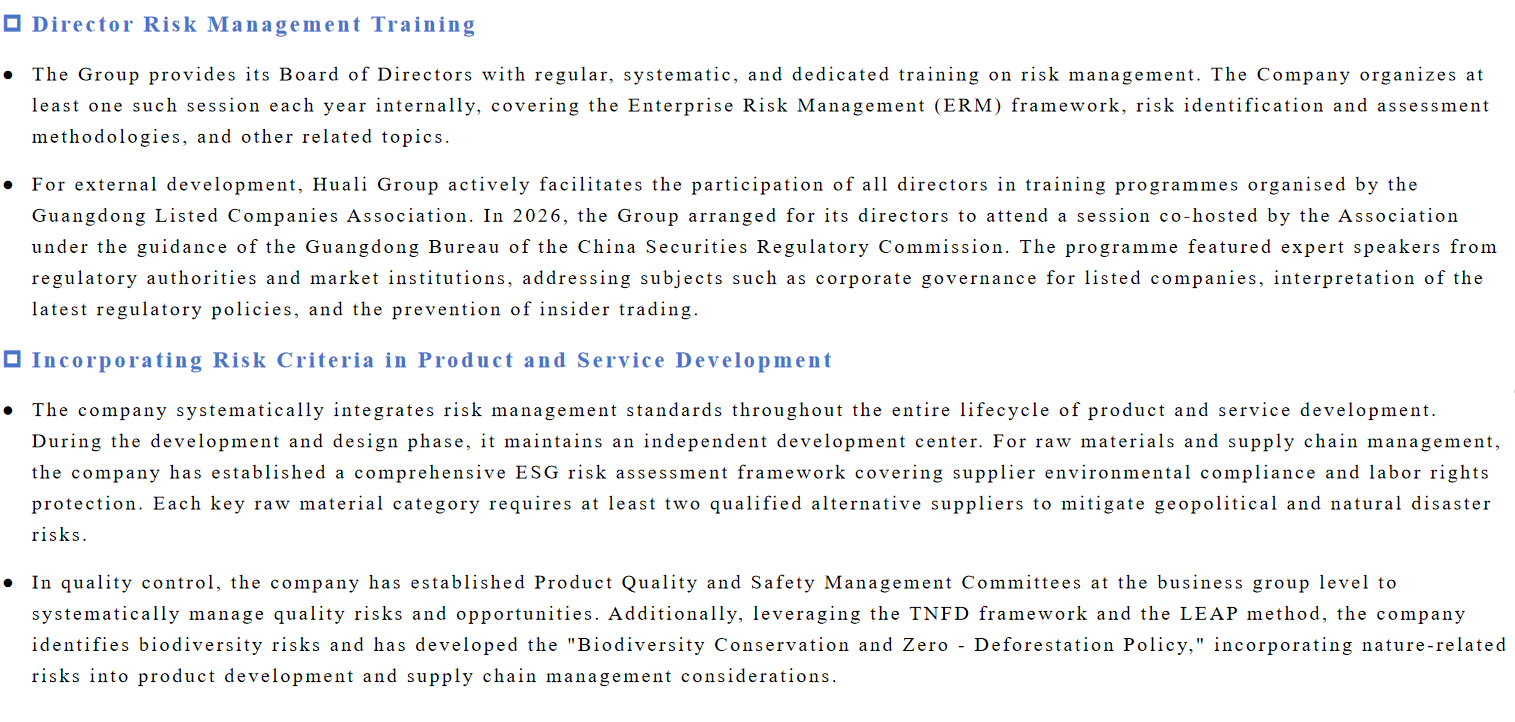
we have comprehensively integrated risk management principles into daily operations while continuously fostering a risk management culture.
We incorporate critical risk management metrics such as product quality, information and data security, labor, and EHS (Environment, Health & Safety) into the routine performance evaluation framework of our departments.Through regular risk management training and awareness campaigns, we enhance all employees’ risk awareness and response capabilities, ensuring that every position can effectively identify and manage potential risks. At the same time, we have established incentive mechanisms for risk management to encourage employees to actively participate in risk prevention and control, fostering a positive environment where all staff are engaged in collectively addressing risks.
More
